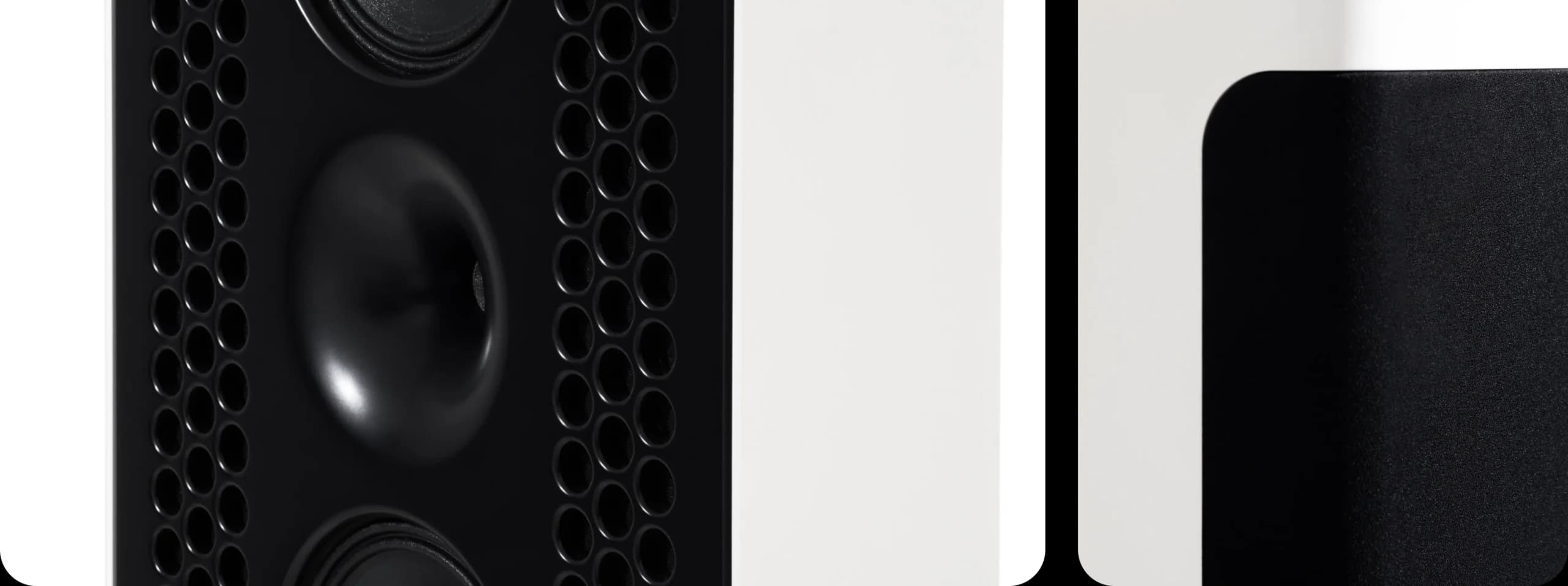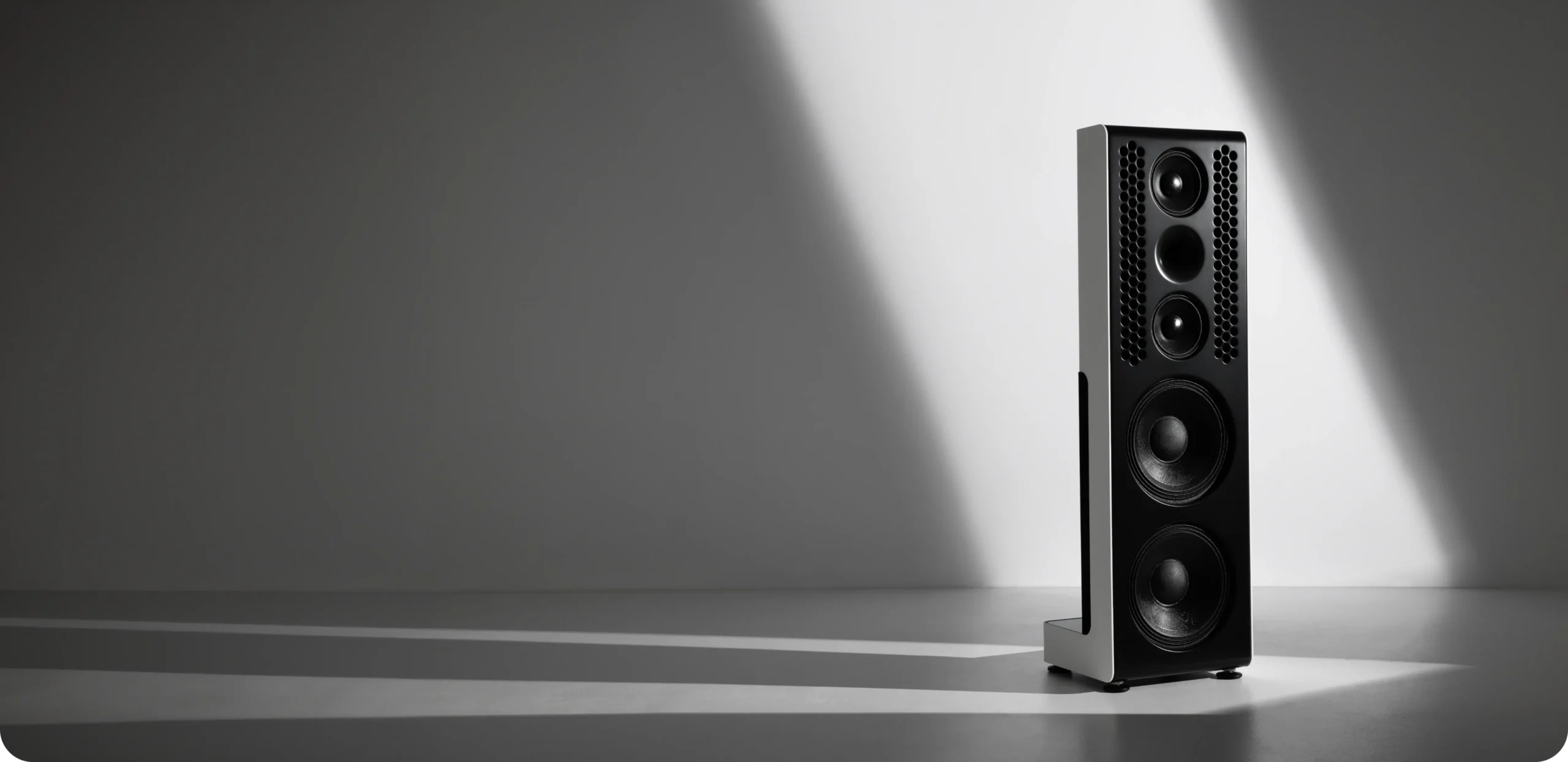
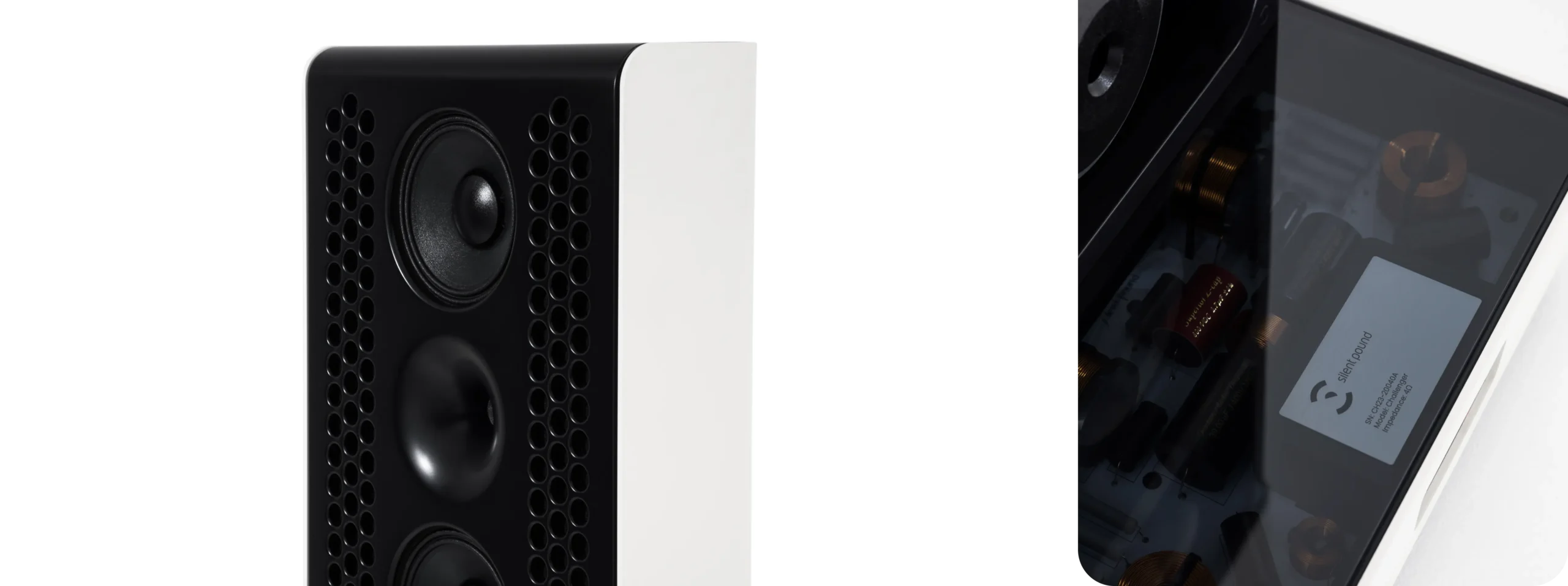
Steel body & 10 mm base
A rigid steel structure with a 10 mm base keeps the cabinet quiet and stable, so more of what you hear is the driver — not the box.
- CNC-formed steel frame
- Damped sandwich construction (MDF + steel)
- 10 mm base for stability
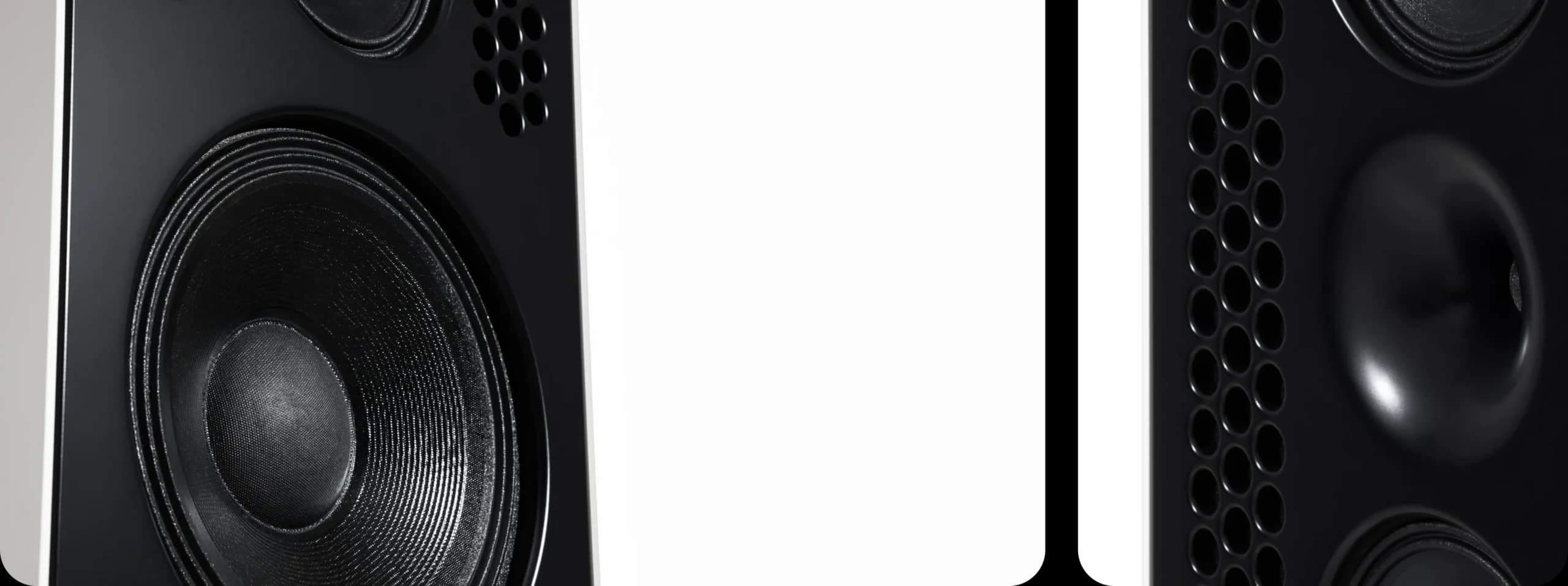
Across-the-spectrum directivity.
01Why it sounds different
We control where sound goes, so you hear more direct sound and less room. Challenger II is the full-range expression of that idea.
Less sidewall splash. Clearer imaging.
Most speakers control only the treble. Challenger II keeps sound controlled across the range, reducing early side reflections.
Cleaner low end in real rooms.
Bass is usually what excites the room the most. Dipole bass sends less energy sideways, so room interaction is reduced.
More clarity and scale through the critical band.
Midrange is where voices and the soundstage live. Our enclosure is designed to control radiation and improve clarity in that band.
“You can play them at level without the room joining in too obviously.”
“A novel way of dealing with side wall reflections and room modes.”
02Signature details
Each pair is assembled, finished, and checked by hand.

A rigid steel structure with a 10 mm base keeps the cabinet quiet and stable, so more of what you hear is the driver — not the box.

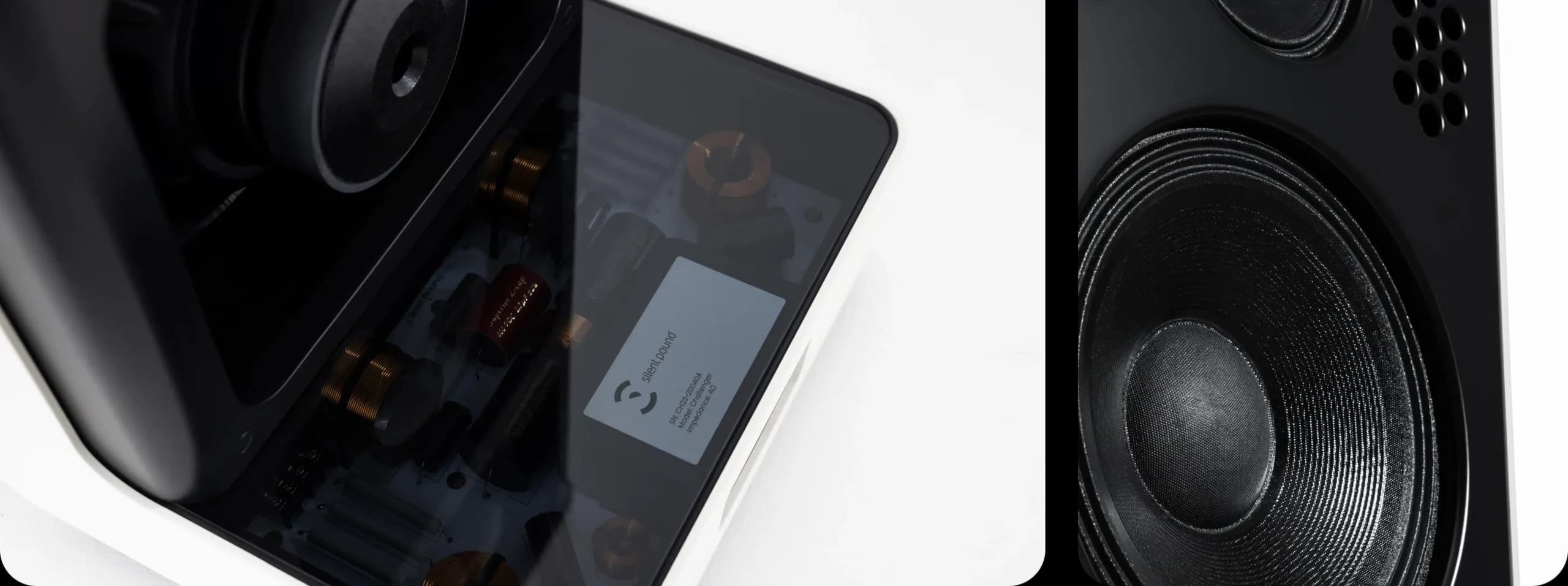
Premium crossover parts preserve detail and timing — and the tempered-glass window makes the engineering part of the design.

High-power motors and pro-style build allow higher output with better cooling and long-term reliability.

The waveguide is built into a rigid MDF front, shaping dispersion for focused imaging and consistent sound in real rooms.
A removable fabric-covered rear frame keeps the open-back design clean while allowing airflow — attached securely with magnets.
A stable stance with integrated Soundcare floor-safe spikes and adjustable tilt helps you dial in the listening axis precisely.
Corrosion-resistant, low-loss connections keep the signal path clean and reliable over time.
03Choose your expression
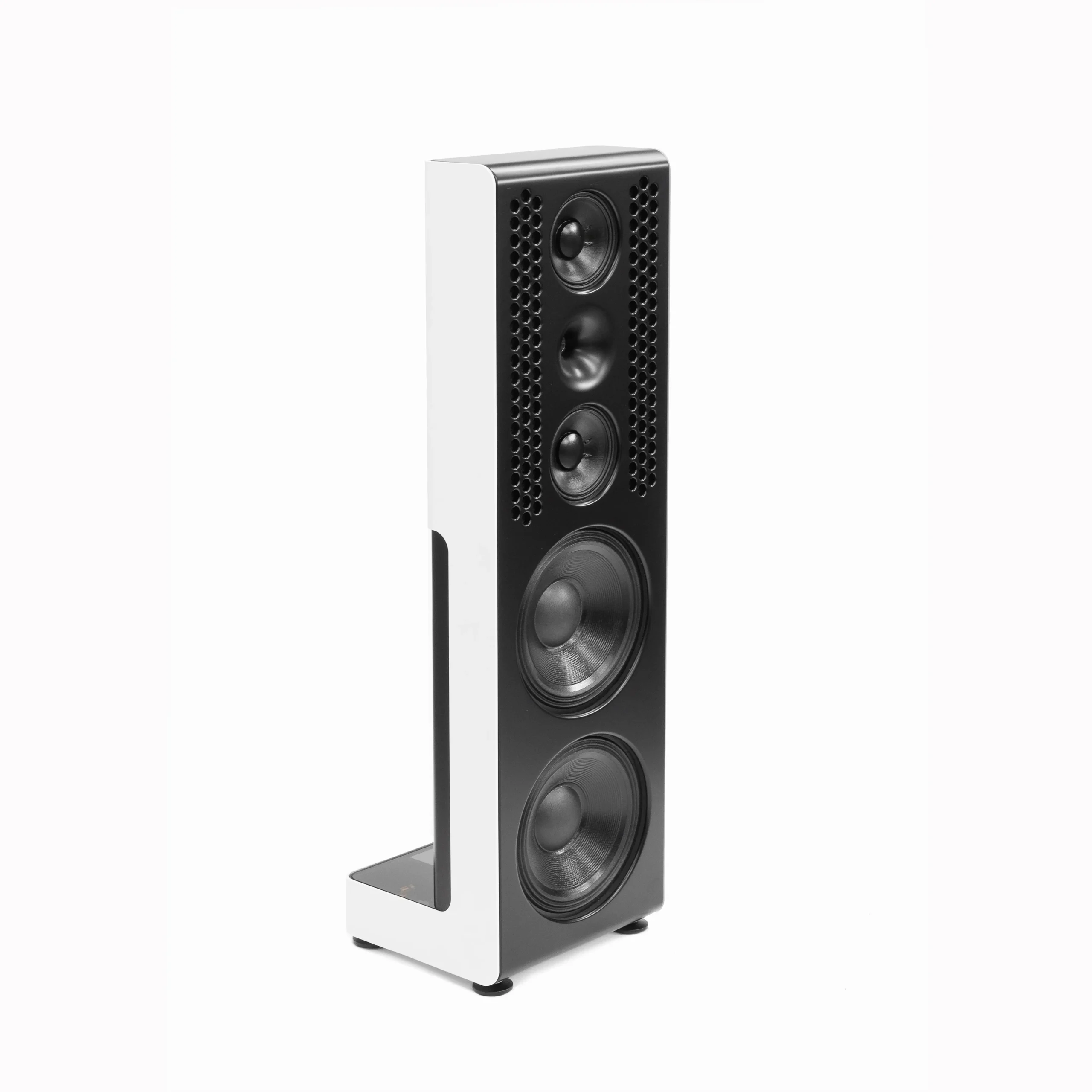
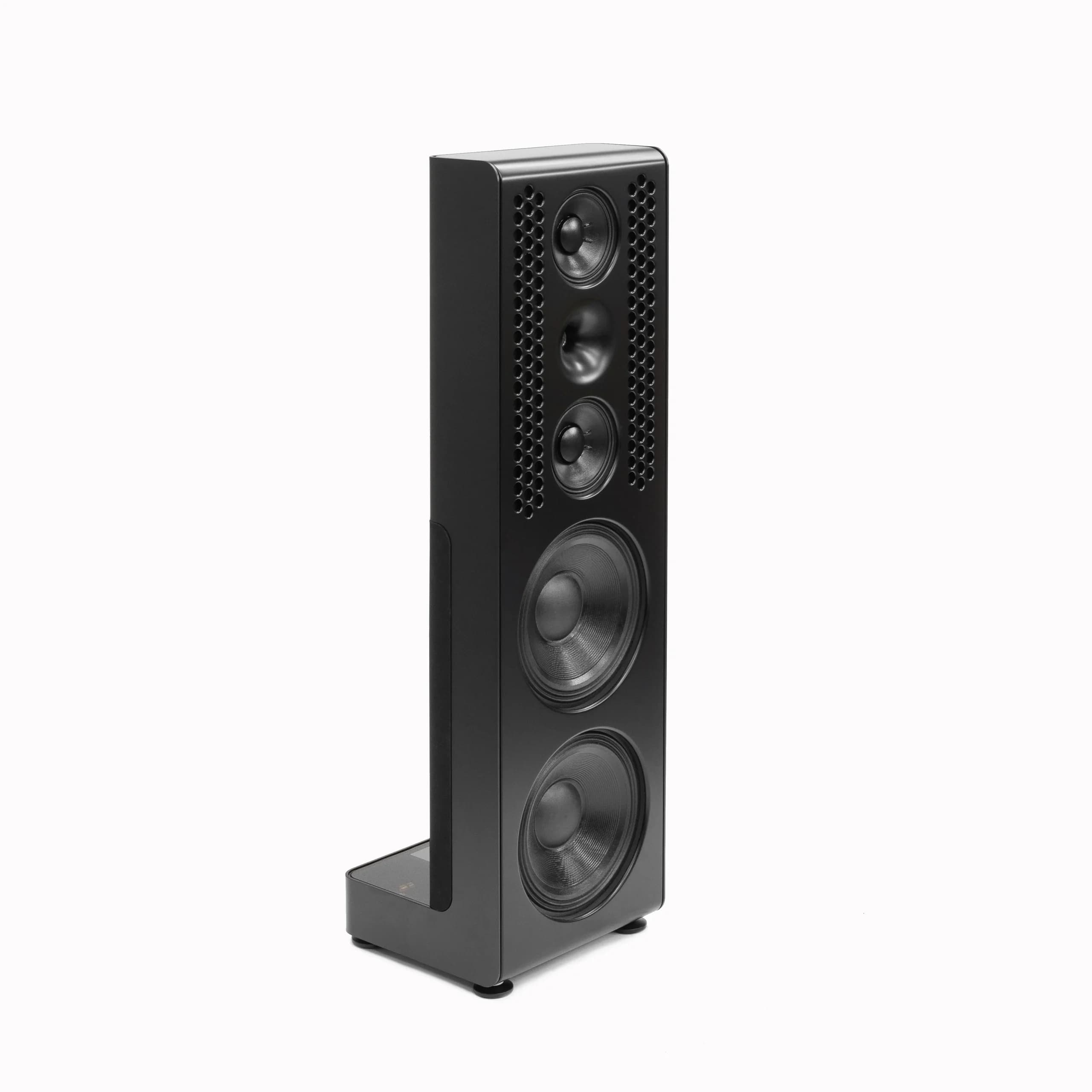
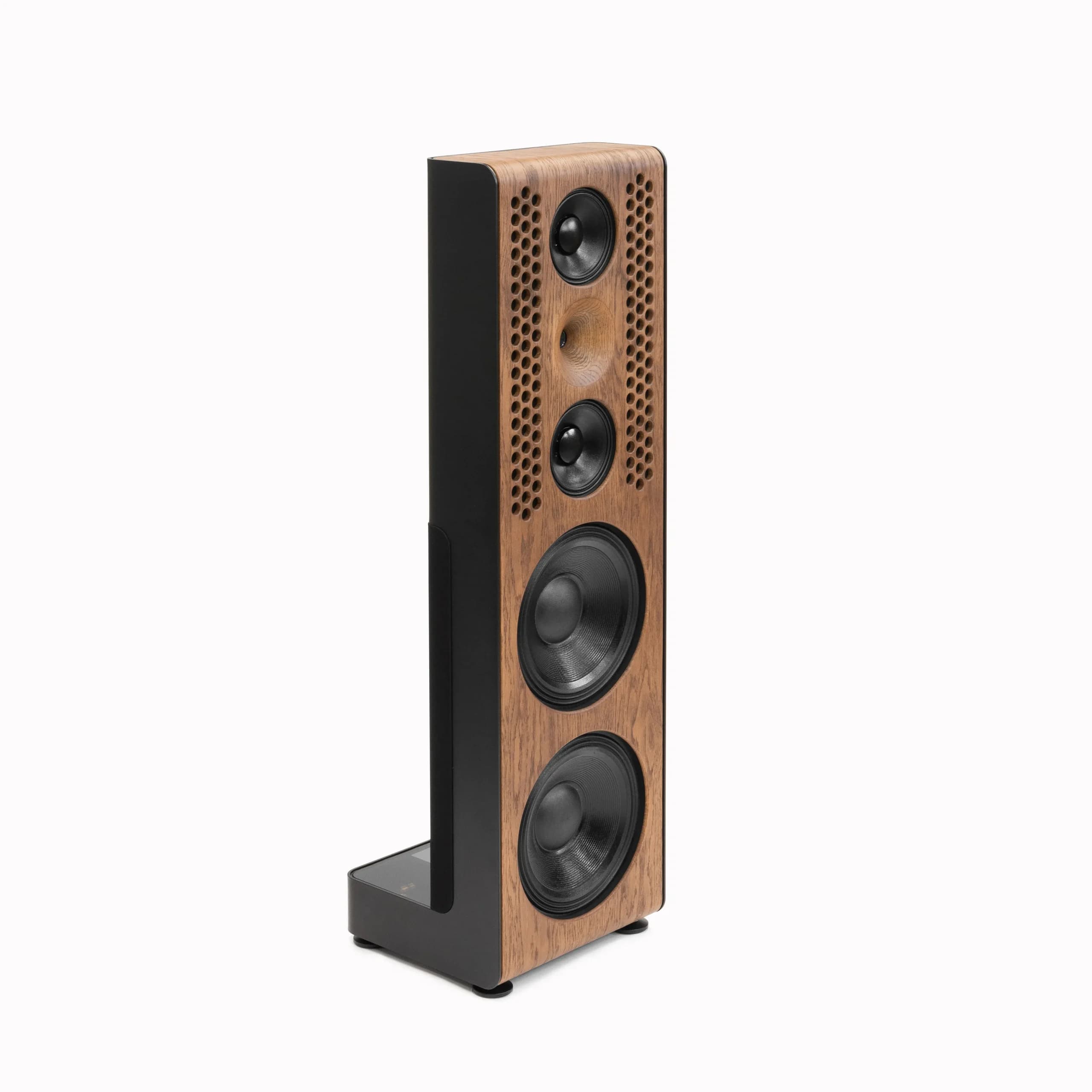
Frame: fine-textured powder coat · Panels: painted MDF or solid oak
From €27,999 (incl. VAT)
Shipping depends on destination.

White
Fine-textured powder coat

Black
Fine-textured powder coat

Oak
Solid oak facade
04Technical specifications
| Audio system | Constant directivity |
|---|---|
| System type | 3.5-way floorstanding loudspeaker |
| Driver configuration | 2 × 300 mm (12") woofers designed for Silent Pound systems · 2 × 160 mm (6") midwoofers · 1" compression driver · MTM driver array |
| Nominal impedance | 4 Ω |
| Minimum impedance | 3.2 Ω |
| Sensitivity | 88 dB / 2.83 V / 1 m |
| Frequency range | 30 Hz – 18 kHz |
| Recommended amplifier power | 100–400 W |
| Dimensions | 124 × 36 × 35 cm |
| Weight | 60 kg / unit |
| Inputs / connectors | Gold-plated banana / spade connectors |
Low minimum impedance can increase amplifier load. Use an amplifier with stable current delivery.
From €27,999 (incl. VAT)
Shipping depends on destination.
Recommended amplification
Challenger II is specified for 100–400 W amplifiers. Because the impedance can dip low, amplifier stability matters more than headline wattage alone. If you share your amplifier model and room size, we can advise a safe match.
05Choose by room
Then check the technical snapshot.
| Metric | Challenger II | Bloom |
|---|---|---|
| Best fit | Medium to large rooms | Small to medium rooms |
| Listening distance | Mid to far field | Near to mid field |
| Main advantage | Scale, headroom, and effortless output | Compact footprint and easier placement |
| Choose it if | The room is the priority and the system can breathe. | The room is tighter or the speakers need to disappear. |
| Nominal impedance | 4 Ω | 4 Ω |
| Minimum impedance | 3.2 Ω | 3.4 Ω |
| Sensitivity | 88 dB / 2.83 V / 1 m | 87 dB / 2.83 V / 1 m |
| Dimensions | 124 × 36 × 35 cm | 110 × 31 × 31 cm |
| Weight | 60 kg / unit | 40 kg / unit |
| Recommended amplification | 100–400 W | 80–300 W |
| Price | From €27,999 | From €14,999 |
06FAQ
Anything not covered here — just ask when you book.
Challenger II is built around controlled directivity. Its dipole low-frequency system, patent-pending midrange enclosure, and integrated waveguide are designed to reduce room interaction and preserve a more stable soundstage in real listening spaces.
Start with at least 50 cm from the rear wall and keep both speakers symmetrical relative to the listening position. More distance from the front wall can improve depth and soundstage stability. Final positioning depends on room size, listening distance, and bass balance.
A high-quality solid-state amplifier with stable current delivery is recommended. Challenger II is specified for 100–400 W amplifiers. Because the impedance can dip low, amplifier stability is more important than headline wattage alone.
Yes. Challenger II is available with fine-textured powder-coated steel, painted MDF or oak facade options, and selected custom RAL colours on request. Availability may vary by finish, model configuration, and lead time.
Silent Pound loudspeakers include a 5-year warranty against manufacturing defects. Exact terms may depend on country and purchase conditions. Please contact us for full warranty details.
Challenger II can be auditioned at our two listening spaces in Kitzbühel, Austria, at private listening sessions, and at audio events. If neither location works for you, contact us and we will suggest the best available option.
Challenger II is best suited to medium and large rooms where the speaker has space to breathe. Its controlled radiation helps reduce room interaction, but placement still matters for bass balance, depth, and imaging.
Yes. Challenger II can work very well in a high-quality stereo cinema setup, especially where scale, dynamics, and a stable front image are important. For full surround systems, integration depends on room layout and processor configuration.
Hear Challenger II in a real room.