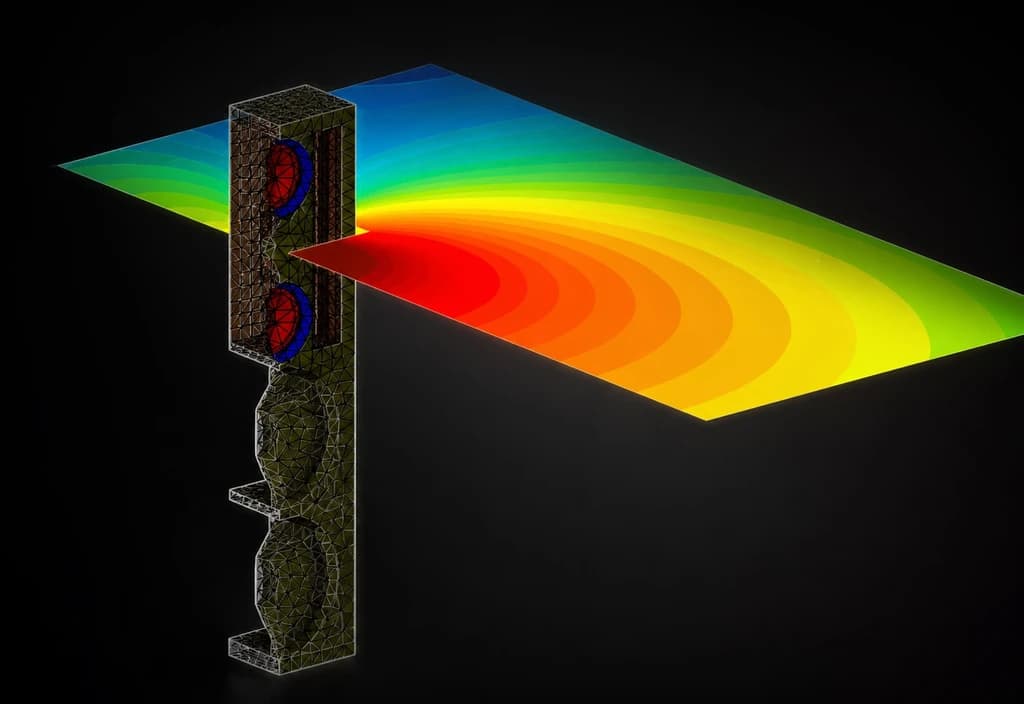
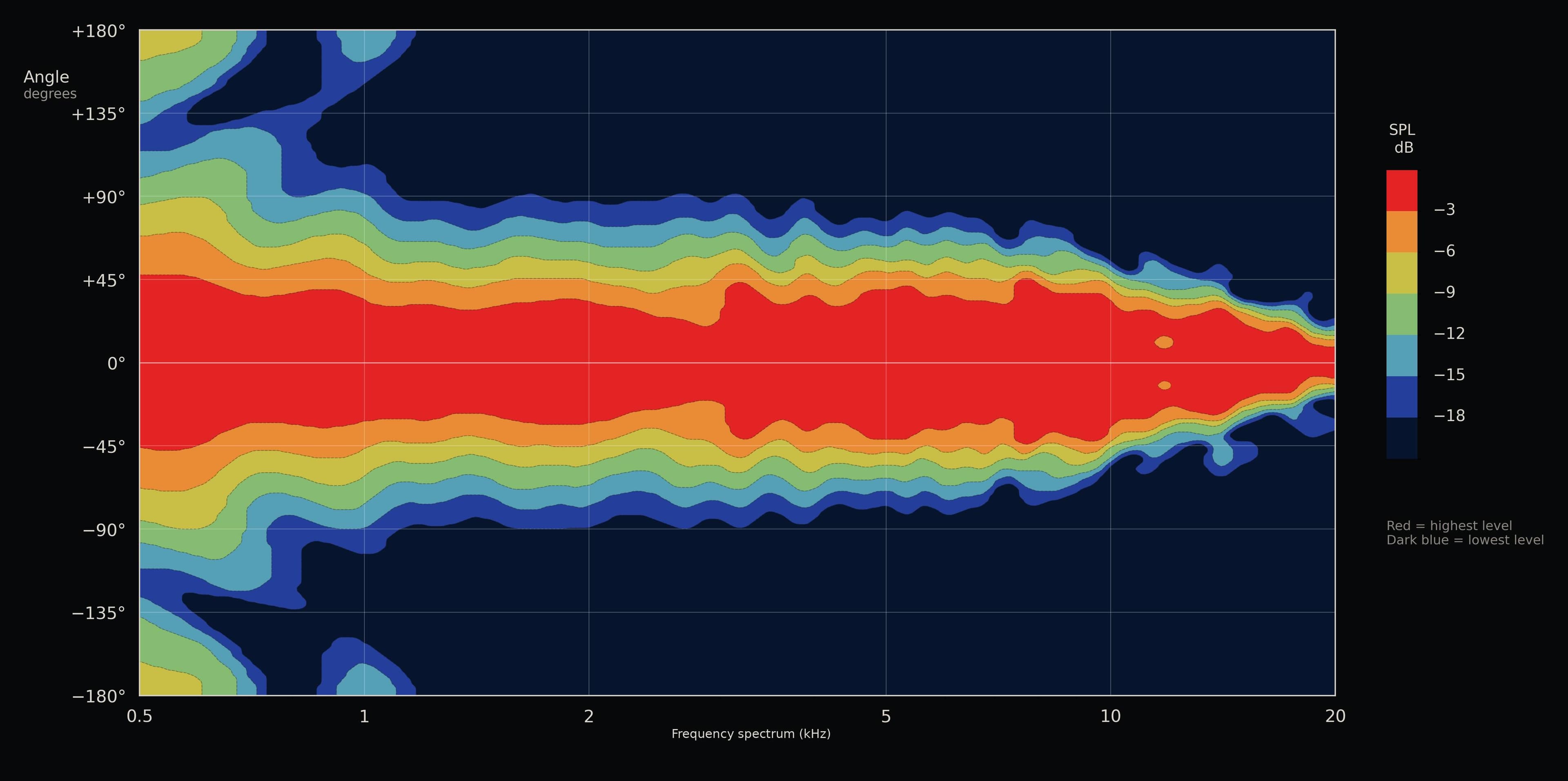
Silent Pound uses high-frequency systems designed to continue the same directivity strategy established by the low-frequency and midrange sections. The goal is not simply to extend treble response, but to keep dispersion controlled and smoothly integrated through the upper frequency range.
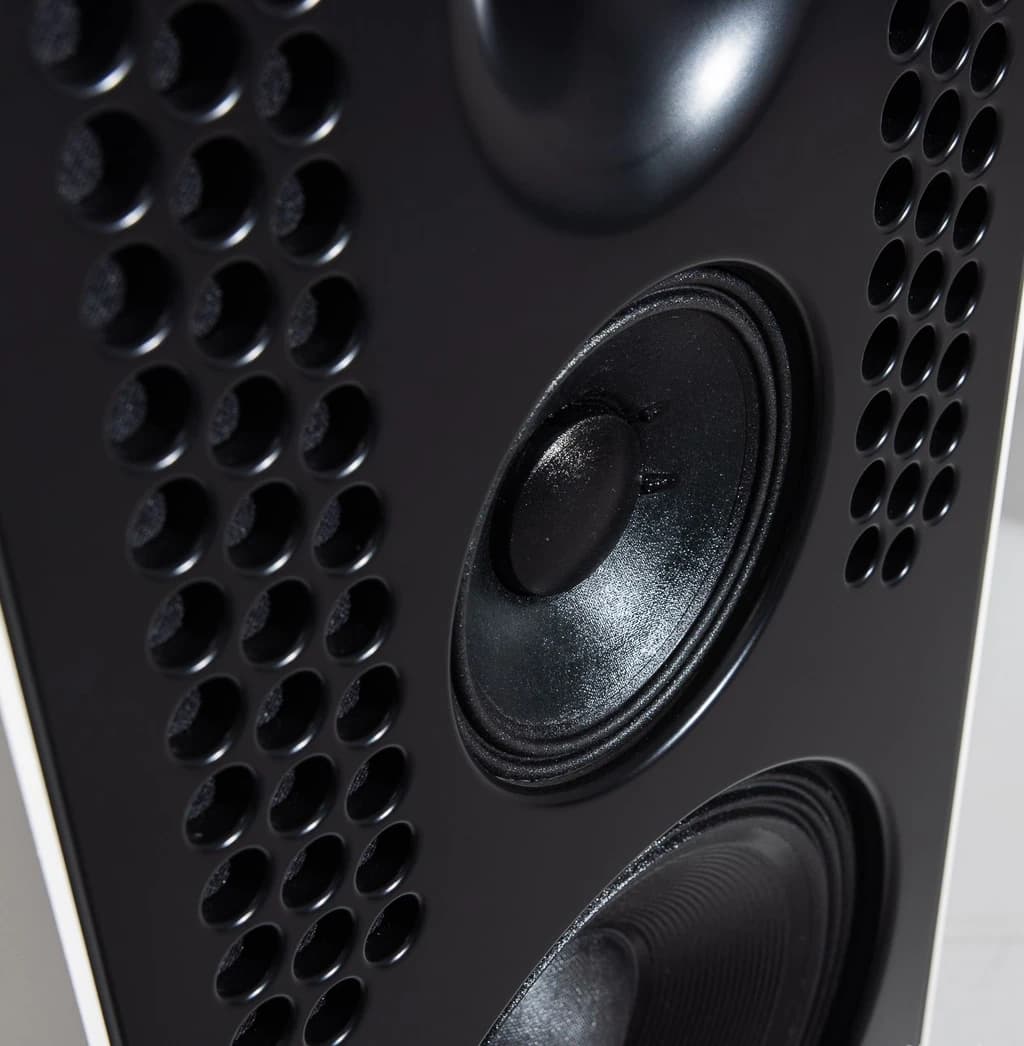
In Bloom, the high-frequency compression driver is integrated into an 8-inch coaxial architecture. Because the midrange and high-frequency sections radiate from the same acoustic centre, phase alignment through the crossover region remains more precise, supporting stable imaging, coherent timing, and a continuous radiation pattern.
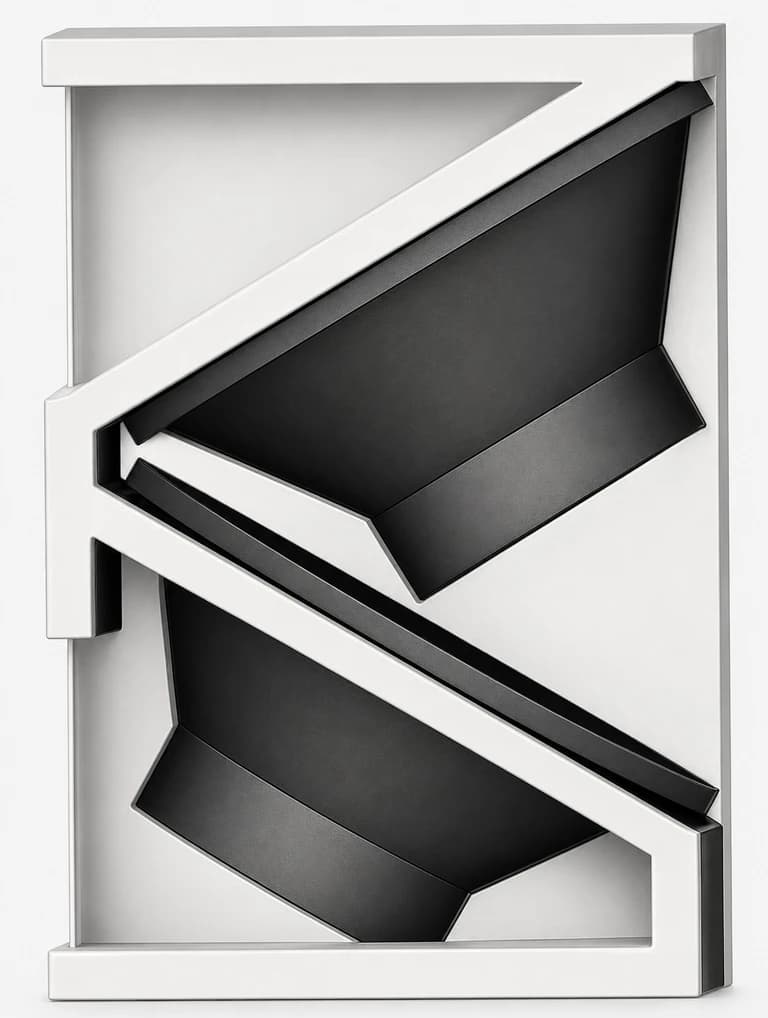
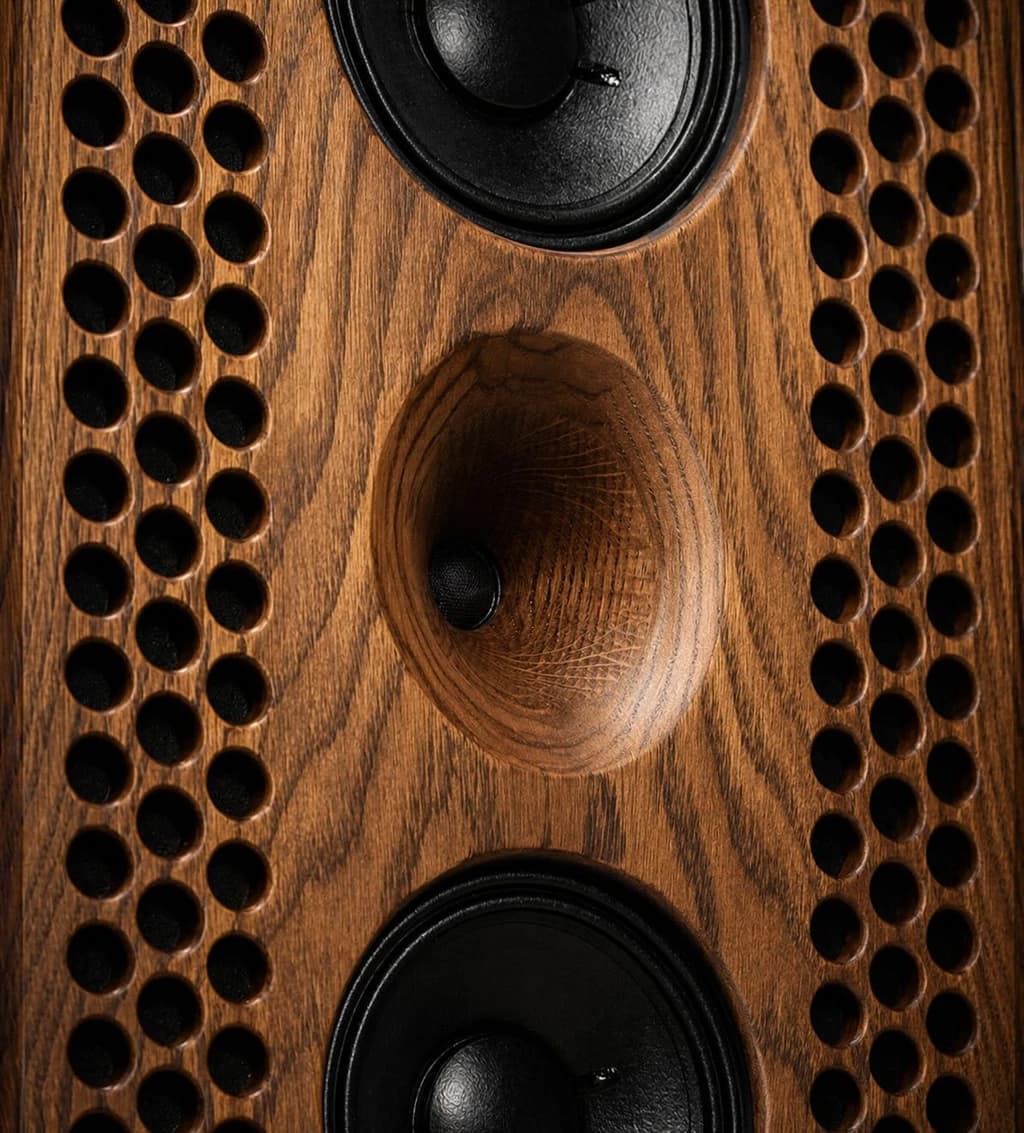
In Challenger II, a mathematically modelled compact horn is used for the high frequencies. Its geometry is optimised to match the midrange directivity, helping the speaker maintain controlled dispersion while reducing unnecessary room interaction.
In both models, the high-frequency section uses a compression driver for high efficiency, fast transient response, and wide dynamic range. The horn or coaxial geometry is used as a precision acoustic tool — not to create a typical “horn sound”, but to control dispersion, preserve clarity, and keep the sound dynamic without harshness.